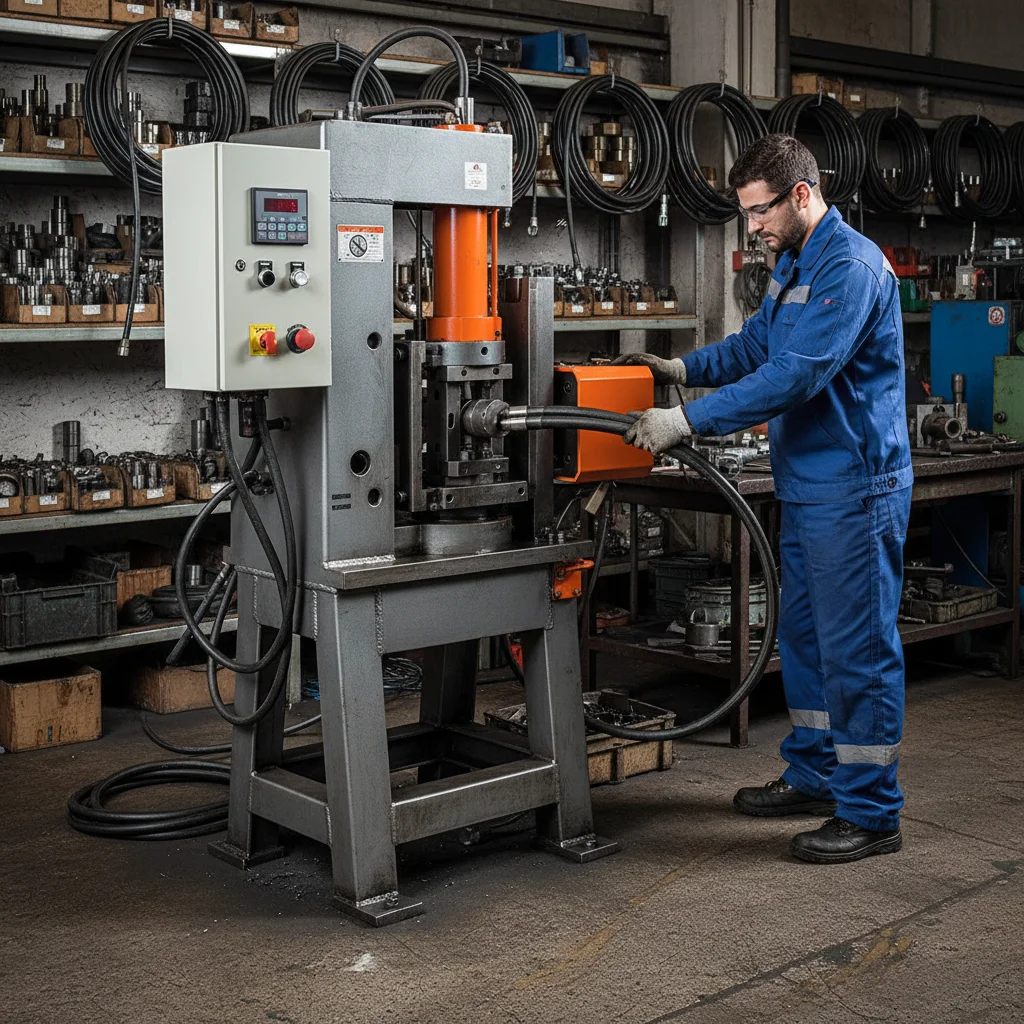
Selecting a high-performance hydraulic hose press machine for sale is often the difference between a secure, leak-proof hydraulic connection and a catastrophic system failure in high-pressure industrial environments. For professionals in metallurgy, mining, and electromechanical engineering, the crimping process is not merely a mechanical step but a critical safety protocol that ensures structural integrity under extreme stress.
The complexity of modern hydraulic systems requires equipment that can handle varying hose diameters and materials with absolute precision. Whether managing heavy-duty industrial pipes or specialized automotive brake lines, the precision of the crimp determines the operational lifespan of the entire assembly.
This guide examines the technical variables involved in selecting the right pressing equipment, evaluating how specific machine capabilities impact overall production efficiency and safety standards in the specialized equipment manufacturing sector.

Analyzing Critical Requirements for Industrial Hose Crimping

Industrial hose assembly is a high-stakes process where the bond between the fitting and the hose must withstand immense internal pressures without slipping or bursting. In sectors like mining and metallurgy, equipment failure can lead to significant downtime and safety hazards, making the choice of a press machine a strategic operational decision.
Most procurement challenges arise from a mismatch between the machine's capacity and the specific hose specifications used in the field. A machine that lacks sufficient tonnage or precise die control will produce inconsistent crimps, leading to premature wear or immediate leakage under load.
To mitigate these risks, operators must look beyond the surface-level specifications and consider the long-term stability of the machine's hydraulic system, the availability of diverse mold sets, and the ease of maintenance in rugged work environments.
Core Technical Indicators of High-Precision Pressing Systems
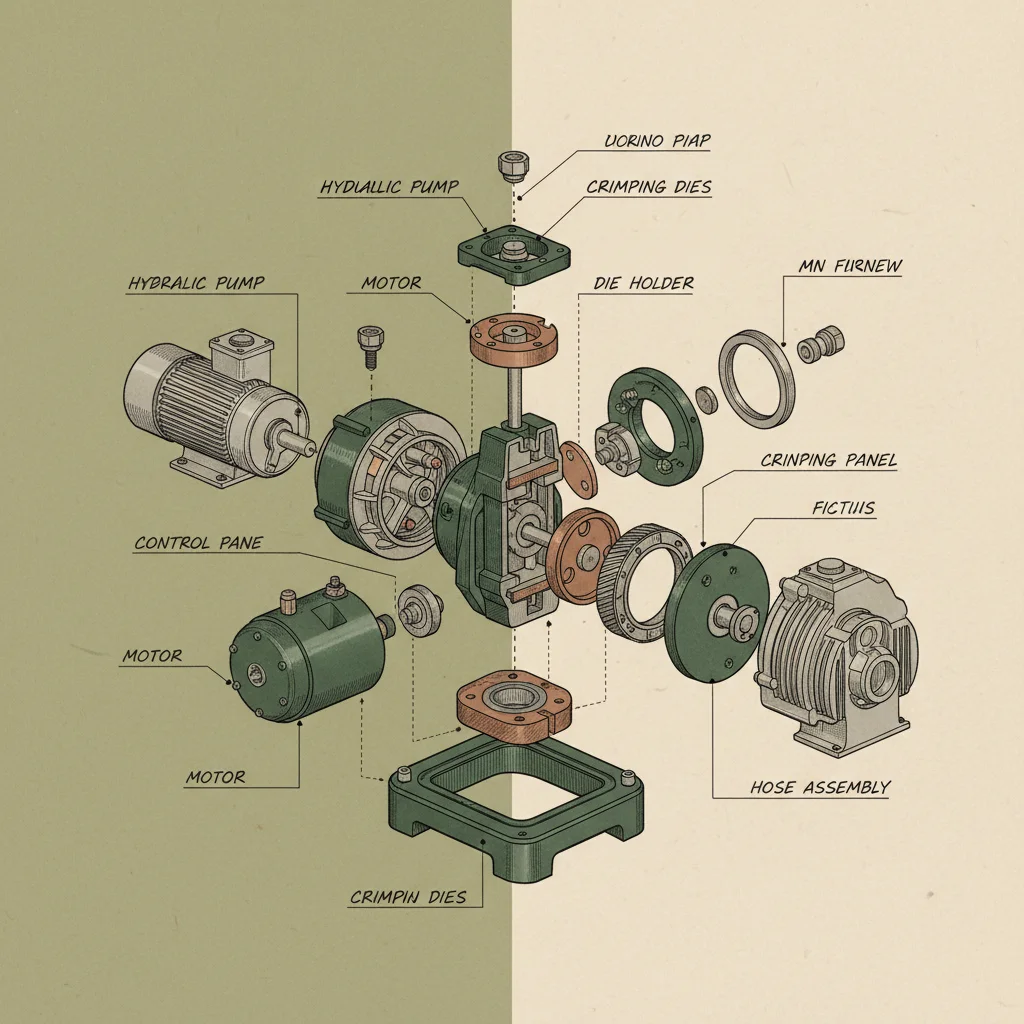
The efficiency of a hose press is defined by its ability to maintain consistent pressure across a wide range of diameters. Key technical indicators include the maximum crimping diameter, the precision of the stroke, and the versatility of the interchangeable die sets.
Advanced systems, such as the DZW series from Dezhou Willex, emphasize stability and adaptability. By utilizing specialized molds, these machines can transition from high-pressure oil pipes to more delicate air conditioning hoses, ensuring that the compression force is perfectly distributed around the circumference of the fitting.
Furthermore, the integration of high-quality materials in the machine's frame and pistons prevents deflection during the press cycle, which is essential for achieving the tight tolerances required by international hydraulic standards.
Operational Integration Across Heavy Industry Scenarios
In practical applications, a hydraulic press machine does not operate in isolation but as part of a complete processing line. For instance, in a specialized workshop, the workflow typically moves from a Hose Cutting Machine to a Hose Skiving Machine and finally to the Crimping Machine.
In the mining industry, for example, the need for rapid on-site repair means that compact, durable machines are preferred. The ability to handle large-diameter hoses—such as those processed by skiving machines up to 2 inches—allows for the creation of heavy-duty assemblies that can survive the abrasive environments of open-pit mining.
Conversely, in automotive and HVAC sectors, the focus shifts toward precision and versatility. Machines capable of crimping smaller diameters with high repetition accuracy are critical for maintaining the airtight seals required for refrigerant lines and brake systems.
Evaluating Performance Benchmarks and Crimping Accuracy
Measuring the performance of a press machine involves comparing its output consistency against industry benchmarks. The primary metric is the variance in the final crimp diameter across a production batch of 100 units.
When utilizing professional-grade equipment, the reduction in failure rates is significant. By optimizing the pressure delivery system, operators can achieve higher uniformity, which directly translates to a lower rate of rejected assemblies during pressure testing.
hydraulic hose press machine for sale Performance Metrics
The data suggests that specialized equipment provides a substantial lift in production reliability, particularly in the "Consistency" and "Failure Reduction" categories, where precision-engineered machines far outperform generic alternatives.
Strategic Procurement and Equipment Integration Guidelines
Procuring a press machine requires a detailed analysis of the current and future hose inventory. Buyers often make the mistake of purchasing a machine based on the average hose size rather than the maximum requirement, leading to costly upgrades within a few years.
A robust procurement strategy involves evaluating the supplier's technical support and the availability of replacement parts. For instance, having access to 24/7 professional technicians can significantly reduce the impact of unexpected equipment failure in a production environment.
Furthermore, consider the power requirements of the facility. Options such as 12V/24V DC power supplies for mobile units or 3-phase power for stationary factory machines ensure that the equipment is compatible with the existing infrastructure.
Future Trajectories in Intelligent Hydraulic Assembly
The industry is currently moving toward the integration of intelligent control systems to minimize human error during the crimping process. Data-driven maintenance and predictive diagnostics are likely to become standard in high-end press machines.
Automation in the pre-assembly phase, utilizing Connector Pre-assembly Machines, is expected to further streamline the workflow, reducing the time between hose cutting and final crimping. This shift toward a more integrated "smart factory" approach could potentially increase throughput while decreasing material waste.
Moreover, the development of new materials for dies and pistons may further extend the lifespan of the equipment, reducing the frequency of replacements and lowering the overall environmental footprint of hydraulic machinery manufacturing.
Decision Matrix for Selecting the Right Press Model
Choosing the correct model depends on the specific volume of production and the diversity of the hose types handled. A versatile machine like the DZW-P series is suitable for general workshops, while customized large-diameter machines are required for specialized industrial applications.
The following matrix provides a comparative view of different solution types based on operational needs and technical requirements.
| Application Model | Primary Use Case | Technical Priority | Operational Scale |
|---|---|---|---|
| Light-Duty Precision | Automotive/HVAC | Diameter Accuracy | Low to Medium |
| Industrial Standard | General Hydraulics | Versatility of Dies | Medium to High |
| Heavy-Duty Specialized | Mining/Metallurgy | Tonnage & Stability | High Volume |
| Field Service Unit | On-site Maintenance | Portability/Low Voltage | Mobile/Variable |
| High-Pressure Custom | Specialized Equipment | Customized Parameters | Project-Based |
| Integrated Line | Full-scale Manufacturing | Workflow Synchronization | Enterprise Level |
Regardless of the model chosen, the ultimate goal is to achieve a balance between speed, precision, and durability to ensure that every hose assembly meets the highest safety standards.
Frequently Asked Questions
Conclusion
Investing in the right hydraulic hose pressing equipment is a fundamental requirement for any operation dealing with high-pressure fluid systems. By focusing on technical precision, capacity versatility, and long-term stability, businesses can ensure their assemblies are safe, durable, and efficient.
Professionals evaluating their equipment needs can review the relevant product and company information available through www.willexcrimper.com to find a solution that aligns with their specific industrial requirements.