When assembling specialized medical or industrial tubing, the choice between automated and manual systems often comes down to a balance of volume, location, and initial budget. For many technicians, the search for a manual hose crimping machine price is not just about finding the cheapest tool, but about identifying a device that delivers industrial-grade piston force without requiring a power grid.
In field maintenance and medical sprayer assembly, the ability to secure a leak-proof connection in remote or confined spaces is critical. The transition toward high-precision manual tools has allowed small-batch producers to maintain strict quality standards while eliminating the overhead associated with heavy electrical installations and complex calibration.
This analysis examines the technical requirements of manual crimping, the economic logic behind the investment, and how specific tools like the DZW-D10 provide a professional alternative to electric machinery in specialized sectors.

Logic of Manual Crimping Systems

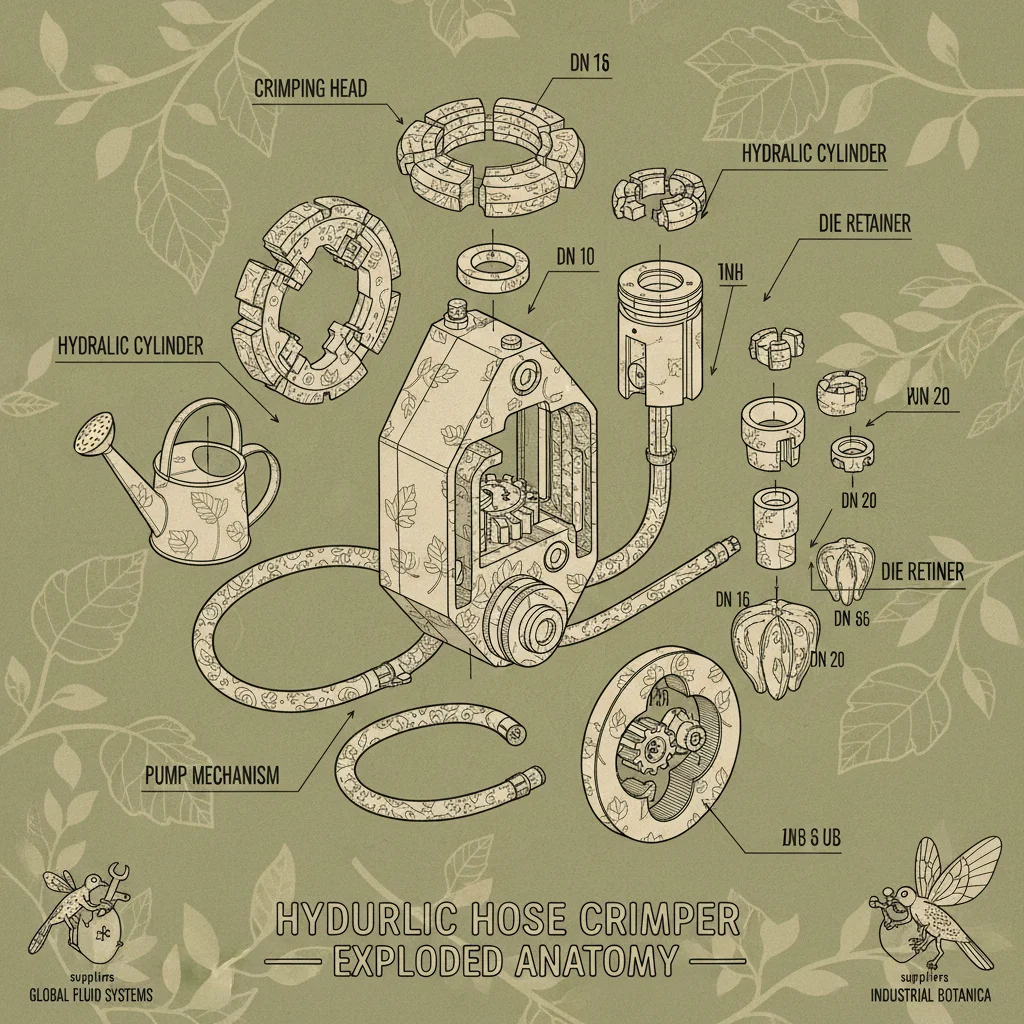
Manual hose crimping is based on the principle of mechanical advantage, where a manual lever or screw mechanism amplifies operator input into a massive compressive force. Unlike electric systems that rely on hydraulic pumps and solenoids, manual machines use a direct piston drive to deform the fitting around the hose, creating a permanent, leak-proof bond.
This approach is particularly effective for small-batch production where the time spent setting up an electric machine exceeds the actual crimping time. By removing the need for electrical calibration and power sources, these systems offer instant operational readiness.
Mechanical Force and Precision Metrics
The efficacy of a manual crimper is measured by its piston force and its ability to maintain consistency across different hose diameters. For instance, a force of 150 KN is often the benchmark for ensuring that medical-grade sprayer hoses and trachea tubes are sealed to prevent any fluid leakage under pressure.
Precision in manual systems is achieved through standardized dies. By utilizing interchangeable molds, a single machine can handle a range of outer diameters (OD), such as 5mm to 34mm, ensuring that the compression ratio is exactly matched to the wall thickness of the hose material.
Furthermore, the cycle time—typically around 10 seconds per crimp—demonstrates that manual tools can remain competitive for specialized tasks. The focus here is not on raw speed, but on the reliability of the seal and the reduction of waste material during the assembly process.
The Portability Paradox in Industrial Assembly
In many industrial settings, the most critical repairs occur in locations where power is unavailable, such as high-altitude construction sites, remote medical facility installations, or cramped maintenance bays. This creates a paradox where the most sophisticated assembly needs must be met by the simplest power configurations.
True operational mobility is achieved when industrial-grade force (150 KN) is decoupled from the electrical grid, allowing professional-grade hose assembly to occur anywhere from a field site to a laboratory bench.
Devices like the DZW-D10 address this by combining a lightweight frame (approx. 11 kg) with a high-strength piston. This allows the equipment to be transported in a compact package and deployed instantly, eliminating the downtime associated with finding power outlets or transporting heavy generators to the work site.
Cost-Efficiency vs. Production Volume
Evaluating the manual hose crimping machine price requires a look at the total cost of ownership (TCO). While electric machines offer higher throughput, they come with higher initial investments, expensive electrical installation, and recurring maintenance costs for motors and sensors.
Manual machines, conversely, offer a budget-friendly entry point with nearly zero operational costs. For businesses focusing on specialized medical sprayer hoses or small-batch customized fittings, the return on investment (ROI) is realized much faster due to the absence of power bills and complex calibration services.
Figure 2. Relative Investment and Operational Index
Specialized Applications in Medical Tubing
Medical tubing, specifically trachea and sprayer hoses, requires a delicate yet firm crimp. Too much pressure can collapse the inner lumen of the hose, while too little leads to failure under pressure. Manual machines allow the operator a level of tactile feedback and control that is often lost in fully automated systems.
By utilizing specialized high-precision tools, manufacturers can ensure that medicine sprayer hoses are assembled with consistent quality across batches. This is essential for maintaining the integrity of medical equipment where a single leak could compromise the sterility or functionality of the device.
Future Trends in Mechanical Processing
The industry is seeing a resurgence in "smart mechanical" tools—devices that remain manual in power but incorporate high-strength new materials to reduce weight while increasing piston force. This trend focuses on reducing operator fatigue without adding electrical complexity.
Additionally, the integration of manual crimpers into a wider ecosystem of tools—such as hose cutting machines and pressure testing equipment—is becoming standard. This creates a modular production line that can be scaled up or down based on current order volumes.
The drive toward environmental sustainability is also favoring manual systems. By eliminating electricity consumption and reducing the reliance on complex electronic components that eventually become e-waste, manual crimping represents a more sustainable approach to low-volume industrial assembly.
Manual vs. Electric Selection Framework
Choosing the right equipment requires an honest assessment of your production environment. If your daily output is in the thousands, an electric system is mandatory. However, if your work involves on-site repairs, specialized medical assemblies, or varying diameters in small batches, a manual system is more logical.
Consider the trade-off between speed and flexibility. Manual machines offer instant deployment and zero power reliance, making them the superior choice for field deployment and rapid prototyping.
The following framework helps buyers determine the suitability of a manual system based on their specific operational constraints.
| Evaluation Factor | Manual (DZW-D10) | Electric System | Selection Logic |
|---|---|---|---|
| Initial Investment | Budget Friendly | High Capital Outlay | Budget constraints favor manual |
| Power Requirement | Zero / Independent | Fixed Electrical Outlet | Field work requires manual |
| Operational Mobility | Extreme Portability | Limited / Stationary | Remote sites require manual |
| Maintenance Complexity | Minimal / Mechanical | Complex / Electronic | Low overhead favors manual |
| Production Volume | Small Batch / Repair | High Volume Industrial | Mass production needs electric |
| Setup Time | Instant Operation | Calibration Required | Rapid deployment favors manual |
Questions & Answers
Manual hose crimping machines are primarily used for small-batch production and on-site repairs where electricity is unavailable. They are particularly effective for specialized tasks, such as assembling medical sprayer hoses and trachea tubes, where precision and portability are more critical than high-speed mass production.
Piston force determines the amount of compression applied to the fitting. A force of 150 KN, as found in the DZW-D10, ensures that the fitting is deformed sufficiently to create a permanent, high-pressure seal. Without adequate force, the hose may slip or leak under operational pressure, which is unacceptable in medical or hydraulic applications.
Yes, manual crimpers use interchangeable dies (molds) to accommodate various outer diameters. For example, a machine with a working range of 5-34mm can be adjusted to fit a wide variety of tubing, provided the correct die is selected for the specific hose and fitting combination.
In terms of seal quality, yes. As long as the machine generates the required piston force and the correct dies are used, the result is a professional-grade crimp. The difference lies in the speed and volume of production, not the structural integrity of the individual connection.
Evaluate based on your daily volume and location. If you operate in a fixed factory with high volume, the higher cost of an electric system is justified by speed. If you work in the field, handle specialized medical hoses, or have a limited budget, the lower price and zero operational cost of a manual system provide a higher ROI.
Maintenance for manual systems is minimal compared to electric versions. It primarily involves regular lubrication of the piston system and cleaning the dies to ensure no debris interferes with the compression process. There are no electrical components to calibrate or motors to replace.
Final Thoughts
The decision to invest in manual hose crimping technology is a strategic move for businesses that prioritize flexibility, mobility, and cost-efficiency. By decoupling high-pressure assembly from the power grid, technicians can maintain professional standards in the most challenging environments.
Whether assembling critical medical sprayer hoses or performing emergency field repairs, the combination of high piston force and portable design ensures that quality is never sacrificed for convenience.