In the demanding world of fluid power and industrial hydraulics, the integrity of a connection can be the difference between seamless operation and catastrophic failure. A high-performance hydraulic hose crimper serves as the critical link in this chain, ensuring that fittings are permanently and securely bonded to hoses to withstand extreme pressures. Understanding the mechanics and precision of these machines is essential for any operation relying on hydraulic systems to maintain safety and efficiency.
Globally, the reliance on hydraulic machinery spans across mining, agriculture, construction, and aerospace sectors. The precision provided by a modern hydraulic hose crimper minimizes the risk of leakage and blowout, which are not only costly in terms of downtime but can pose significant environmental and safety hazards. As industries push toward higher pressure ratings and more compact designs, the demand for advanced crimping technology continues to grow.
Whether you are managing a specialized workshop or a large-scale manufacturing plant, investing in the right crimping equipment ensures long-term reliability. By leveraging precision-engineered dies and stable hydraulic force, a hydraulic hose crimper transforms raw components into high-pressure conduits capable of powering the world's heaviest machinery, making it an indispensable asset in the modern industrial landscape.

Global Relevance of Hydraulic Hose Crimping Technology
The global industrial infrastructure relies heavily on the transmission of hydraulic power to perform heavy-duty tasks. From the massive excavators used in open-pit mining to the precise actuators in automated factories, the hydraulic hose crimper is the unsung hero that ensures these systems remain leak-free. According to ISO standards for fluid power, the precision of the crimp is the primary determinant of the assembly's burst pressure and operational lifespan.
In regions with rapidly expanding infrastructure, such as Southeast Asia and Africa, the demand for reliable hose assembly has spiked. The challenge often lies in the inconsistency of manual or low-grade crimping, which leads to premature hose failure. By adopting standardized, high-pressure crimping technology, companies can significantly reduce operational risks and ensure that their machinery meets international safety specifications.
Defining the Modern Hydraulic Hose Crimper
At its simplest, a hydraulic hose crimper is a precision machine designed to compress a metal fitting (ferrule) onto a hydraulic hose. This process creates a permanent, mechanical bond that prevents the hose from slipping out of the fitting even when subjected to thousands of pounds of pressure per square inch (PSI). It is a critical piece of equipment for any business specializing in hydraulic repair or the manufacture of specialized industrial hoses.
Beyond the basic mechanical action, modern crimpers integrate advanced electronics to ensure repeatability. Unlike old-school manual presses, today's machines use programmable logic controllers (PLCs) and digital readouts to monitor the exact diameter of the crimp. This transition from "feel-based" crimping to "data-driven" crimping has revolutionized the reliability of fluid power systems.
In a broader industrial context, these machines are the backbone of maintenance, repair, and overhaul (MRO) operations. Whether it is a specialized DZW-FP140 model for large-diameter hoses or a compact unit for field service, the goal remains the same: creating a secure, airtight, and high-pressure seal that protects both the equipment and the operator.
Core Components for Maximum Precision
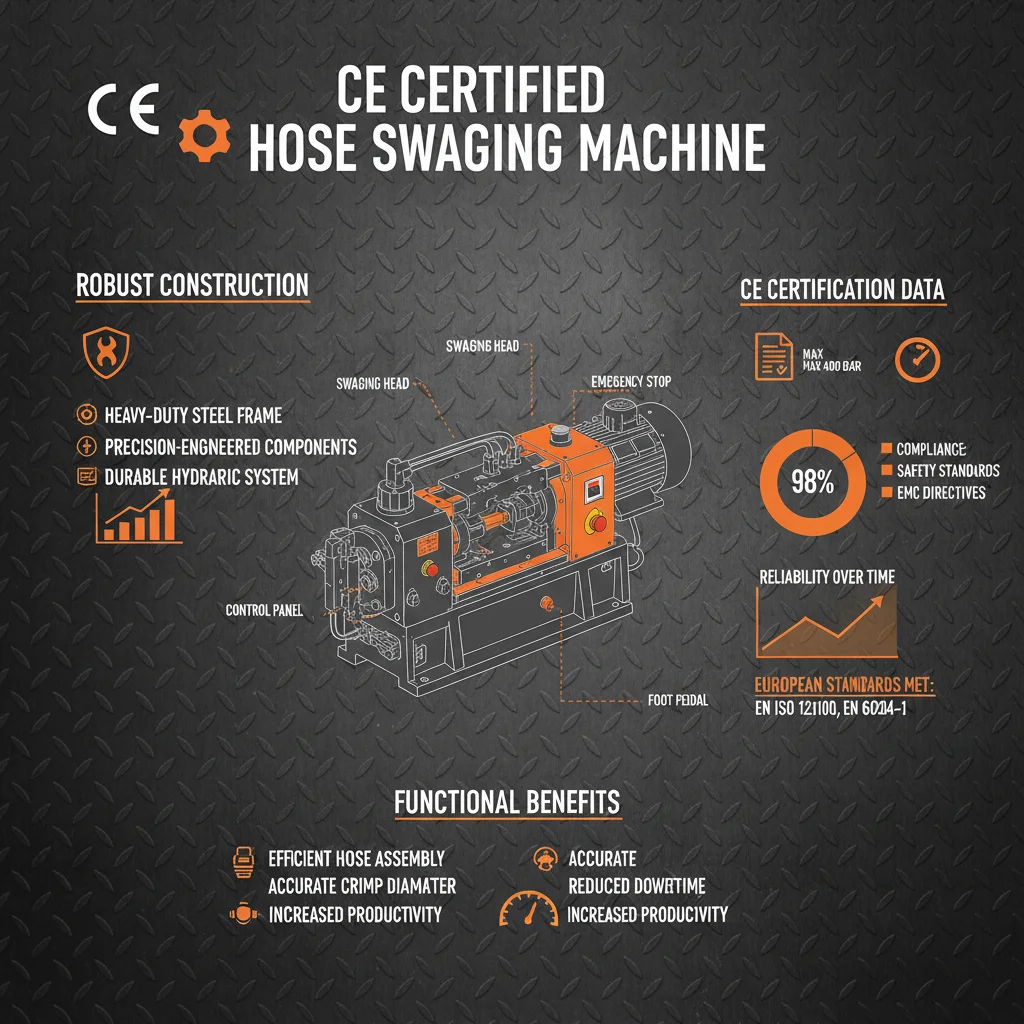
The heart of any high-quality hydraulic hose crimper lies in its structural rigidity and the quality of its drive system. A heavy-duty frame prevents deflection during the crimping cycle, while a high-torque motor (such as a Siemens motor) ensures that the machine can deliver the necessary tonnage without stalling or losing precision.
Precision is further enhanced by the integration of high-accuracy measurement tools. For instance, the use of a Turkish electronic ruler allows operators to monitor the crimp diameter in real-time, ensuring that every assembly adheres to strict tolerances. When paired with Schneider electronic control accessories, the machine achieves a level of stability that eliminates the guesswork often associated with hose assembly.
Finally, the dies are the point of contact that define the quality of the finished product. Molds crafted with a hardness of 60-65 HRC ensure that the hydraulic hose crimper can perform thousands of cycles without the dies wearing down or losing their shape. This wear resistance is vital for maintaining evenly spaced crimp lines and a professional aesthetic.
Industrial Applications and Global Use Cases
The application of a hydraulic hose crimper extends far beyond the local repair shop. In the mining industry, where massive haul trucks and drills operate in abrasive environments, on-site crimping stations are essential. The ability to quickly fabricate a high-pressure hose in a remote pit can save a mining operation tens of thousands of dollars in hourly downtime.
Similarly, in the maritime and offshore oil sectors, the extreme salt-water environment and immense pressures require hoses that are crimped to perfection. A failure in a deep-sea drilling rig's hydraulic line could lead to an environmental disaster; therefore, the use of precision-calibrated crimpers is a non-negotiable safety requirement.
Performance Comparison of Hose Crimping Methods
Tangible Advantages of Professional Crimping
The primary advantage of utilizing a professional hydraulic hose crimper is the dramatic increase in safety and reliability. When a hose is crimped with the correct tonnage and diameter, the fitting becomes an integral part of the hose structure. This prevents "blow-offs," where the fitting is ejected under pressure, potentially causing severe injury to nearby personnel.
From a financial perspective, the long-term value lies in reduced waste and lower maintenance costs. Precision crimping reduces the rate of "re-dos" and prevents premature wear on the hose ends. For companies offering hose assembly services, the ability to provide a certified, high-quality crimp builds trust and allows for premium pricing based on the guaranteed quality of the product.
Future Innovations in Crimping Automation
The future of the hydraulic hose crimper is moving toward full digital integration and the "Industry 4.0" paradigm. We are seeing the emergence of smart crimpers that can store thousands of die settings in a cloud database, allowing an operator to simply scan a barcode on a hose and have the machine automatically adjust to the correct crimp diameter.
Sustainability is also playing a larger role. New hydraulic stations are being designed to be more energy-efficient, utilizing variable-frequency drives (VFDs) to reduce power consumption during idle periods. Additionally, the development of more sustainable materials for dies is reducing the environmental footprint of machine manufacturing.
Automation is further evolving through the integration of AI-driven quality control. Future systems may incorporate vision sensors that inspect the crimp area in real-time, automatically flagging any irregularities in the surface finish or diameter before the part even leaves the machine, ensuring 100% quality assurance.
Overcoming Challenges in Hose Assembly
One of the most common challenges in hose assembly is the variability of hose wall thickness between different brands. A hydraulic hose crimper must be versatile enough to handle these variations. The solution lies in the use of high-precision electronic rulers and adjustable digital settings, allowing operators to fine-tune the crimp based on the specific batch of hose being used.
Another hurdle is the wear and tear of dies in high-volume environments. To combat this, the industry has moved toward high-hardness alloys and advanced heat-treatment processes. By utilizing molds with a hardness of 60-65 HRC, manufacturers can ensure that the crimping force is distributed evenly, preventing the "egg-shaping" effect that occurs with inferior tooling.
Finally, training remains a significant barrier. To solve this, modern machines are incorporating intuitive touchscreen interfaces. By replacing complex manuals with symbolic, visual guides, the learning curve for operating a hydraulic hose crimper has been drastically reduced, allowing less experienced technicians to produce professional-grade results.
Technical Analysis of Hose Crimper Performance by Model Series
|
Machine Series
|
Max Crimping Force
|
Precision Level
|
Typical Application
|
| DZW-P16/P18 |
Medium |
High |
Light Industrial/Auto |
| DZW-P32 Series |
High |
Very High |
General Hydraulics |
| DZW-FP140 |
Extreme (3200KN) |
Ultra-High |
Heavy Mining Equipment |
| DZW-EP120 |
High |
High |
Industrial Power Plants |
| Specialized Custom |
Variable |
Custom |
Aerospace/Defense |
| Compact Series |
Low-Medium |
Medium |
Field Maintenance |
FAQS
Choosing the correct die set depends on the outer diameter of the hose and the specific ferrule being used. You should refer to the manufacturer's crimp chart, which lists the required final crimp diameter. For example, the P140 series offers a wide range of diameters (e.g., P140/74 for 74.0-78.0mm). Always ensure the die matches the hose specification to avoid under-crimping (leakage) or over-crimping (hose damage).
Manual crimpers rely on hand-operated levers and are suitable for very light-duty, low-pressure applications. In contrast, a professional hydraulic hose crimper uses a motorized hydraulic pump to apply tons of consistent pressure. This ensures a uniform seal around the entire circumference of the hose, which is mandatory for high-pressure industrial systems where safety and leak prevention are critical.
For high-volume production, we recommend a calibration check every 3 to 6 months. However, you should verify your crimp diameters using a digital caliper at the start of every new batch of hoses. If you notice a deviation in the final diameter or if the machine has undergone significant maintenance, immediate recalibration of the electronic ruler and pressure settings is necessary to maintain quality standards.
Yes, provided the machine has a diverse set of dies. While the machine itself provides the power, the dies determine the fit. Since different brands may have slightly different wall thicknesses, you should use a machine with a digital display (like our Siemens-powered models) to adjust the crimp diameter precisely for each brand's specific requirements.
Signs of wear include uneven crimp lines on the ferrule, a "slipping" feel during the crimping process, or a failure to reach the target diameter despite correct settings. If you notice visible pitting or deformation on the die surface, replace them immediately. Using worn dies can lead to inconsistent seals and potentially dangerous hose failures under pressure.
While not strictly "necessary" for the mechanical act of crimping, a touchscreen significantly improves efficiency and reduces human error. It allows operators to quickly switch between stored presets and provides an intuitive interface that reduces training time. In a fast-paced shop, the ability to set parameters via a screen rather than manual dials increases throughput and ensures a higher level of consistency across different operators.
Conclusion
The hydraulic hose crimper is more than just a tool; it is a critical component of industrial safety and operational efficiency. From the integration of high-precision Siemens motors and Schneider controls to the use of ultra-hard HRC 60-65 dies, the evolution of this technology has transformed hose assembly from an art into a precise science. By ensuring a perfect mechanical bond, these machines protect equipment, save costs, and most importantly, save lives by preventing high-pressure failures.
As we look toward a future of increased automation and digital integration, the role of the professional crimper will only become more central to the global supply chain. For businesses looking to upgrade their capabilities, investing in high-tonnage, digitally controlled equipment is the best way to ensure longevity and competitiveness in an ever-demanding market. We invite you to explore our range of professional solutions to elevate your production standards. Visit our website: www.willexcrimper.com