Introduction
When evaluating the hydraulic pipe punching machine price, most procurement managers focus solely on the initial invoice. However, in the specialized field of hydraulic pipe processing, the true cost of ownership is tied to the precision of the crimping force and the versatility of the die sets. Whether you are equipping a stationary workshop or a mobile service vehicle, the balance between portable power and industrial-grade durability determines whether a machine is a long-term asset or a recurring expense.
The complexity of hydraulic systems means that a failure in a single connection can lead to catastrophic downtime in mining or metallurgy operations. This makes the relationship between equipment cost and operational reliability critical. High-performance machinery, such as the Hose Crimping Machine DZW-P32, integrates specific technical parameters—like a 2000 kN crimping force—to ensure that medium-sized hydraulic hoses are secured without compromising the structural integrity of the fitting.
Understanding the drivers of equipment pricing requires a deep dive into technical specifications, power adaptability, and the total lifecycle value. This guide analyzes the factors that influence hydraulic pipe punching machine price and provides a professional framework for selecting equipment that optimizes both the initial investment and the long-term return on investment for hydraulic processing facilities.

Understanding the Core Mechanics of Hydraulic Crimping

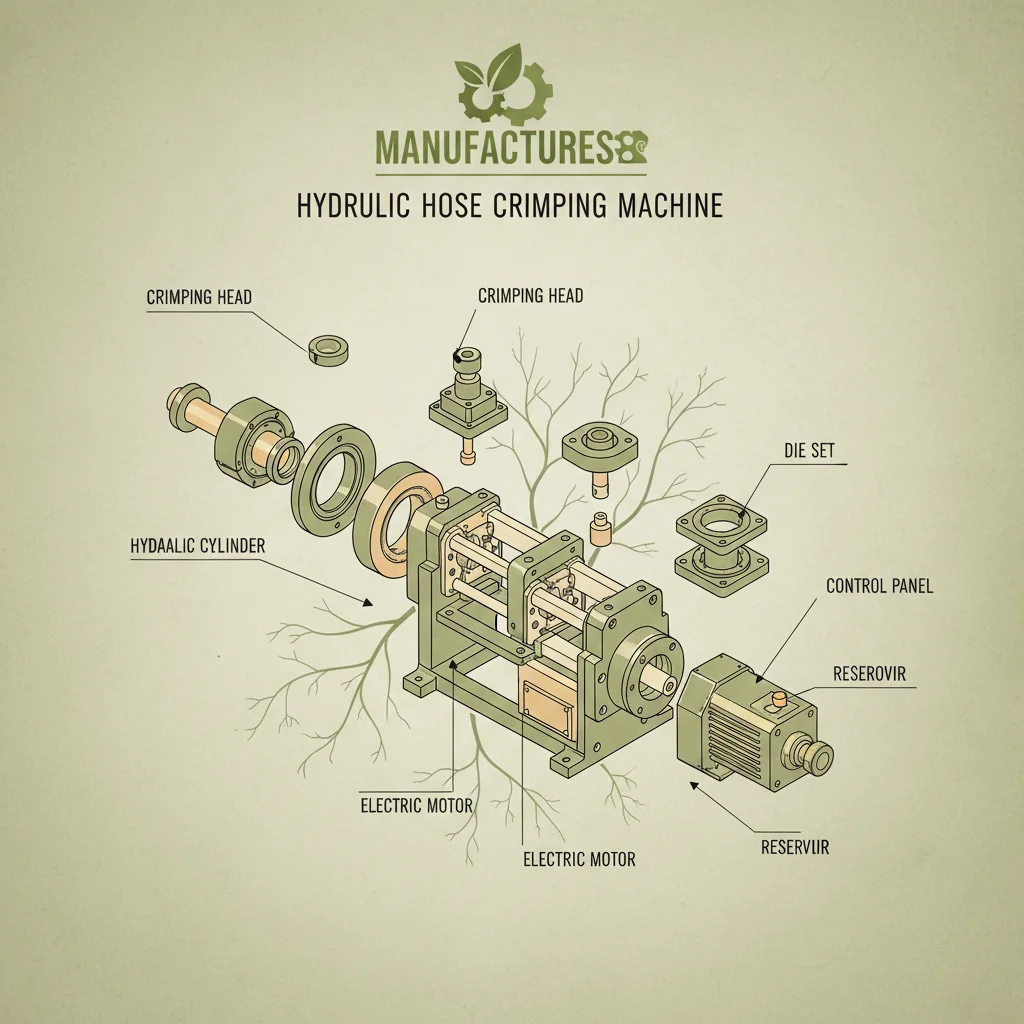
Hydraulic crimping technology is designed to create a permanent, leak-proof seal between a hydraulic hose and its fitting by applying controlled radial pressure. Unlike simple punching, the crimping process involves the deformation of the fitting's outer shell into the hose's reinforcement layer. This ensures that the connection can withstand extreme internal pressures common in metallurgy and mining equipment. The efficiency of this process depends on the synchronization of the hydraulic cylinder and the precision of the die set.
In professional setups, the machinery must manage a wide range of diameters. For example, the DZW-P32 series utilizes a sophisticated die system to handle ranges from 4mm up to 50.8mm. The core mechanical value lies in the ability to maintain consistent pressure across the entire circumference of the pipe, preventing uneven compression which could lead to premature fitting failure under high-pressure cycles. This technical stability is what separates industrial-grade machinery from entry-level tools.
Critical Technical Factors Influencing Equipment Value
Several key parameters directly impact the pricing and performance of hydraulic processing equipment. First, the crimping force—measured in kilonewtons (kN)—determines the maximum hose size and pressure rating the machine can handle. A force of 2000 kN, as seen in professional-grade portable models, allows for the secure processing of medium-to-large industrial hoses, ensuring that the connection meets stringent safety standards for high-pressure oil pipes.
The true value of a crimping system is found in its power adaptability; machines that support dual voltage (12V/24V DC) offer unparalleled flexibility for vehicle-mounted applications, enabling on-site repairs in remote mining areas where mains electricity is unavailable.
Additionally, the quality of the die sets plays a pivotal role. The ability to switch between standard and special die sets allows a single machine to accommodate diverse hose diameters, from small automotive brake lines to large-diameter industrial conduits. This multifunctionality reduces the need for multiple specialized machines, effectively lowering the total capital expenditure for the operator while increasing workshop throughput.
Maximizing Operational ROI Through Precision Engineering
Calculating the return on investment for hydraulic machinery requires looking beyond the purchase price. Efficiency is measured by the number of successful crimps per hour and the rate of fitting rejection. A machine capable of 200 crimps per hour significantly reduces labor costs and accelerates the turnaround time for critical equipment repairs, which is vital in high-stakes industrial environments.
Reliability in extreme conditions also protects the ROI. Equipment designed with a compact, sturdy body—such as the 165kg DZW-P32—balances the need for portability with the structural rigidity required to exert 200 tons of force without frame deformation. This longevity ensures that the machine remains operational for years, reducing the frequency of costly replacements.
Equipment Performance Efficiency Comparison
Deployment Scenarios in Heavy Industrial Environments
In the metallurgy and mining sectors, hydraulic failures often occur in the middle of an open-pit mine or deep within a refinery. The deployment of vehicle-mounted hose crimpers allows technicians to bring the factory to the failure point. By utilizing battery-powered systems that integrate with a vehicle's onboard power, companies can eliminate the logistics of transporting heavy hoses back to a central workshop, thereby reducing downtime from days to hours.
Beyond mobile repairs, stationary setups in specialized equipment manufacturing focus on high-volume precision. Using a combination of Hose Cutting Machines and Hose Skiving Machines alongside the crimper creates a complete assembly line. This integrated workflow ensures that every hose is cut to exact length, skived for maximum grip, and crimped to precise specifications, resulting in a professional-grade assembly that maximizes the lifespan of the hydraulic system.
Future Integration of Intelligent Control Systems
The trajectory of hydraulic machinery is moving toward data-driven precision. The integration of intelligent control systems is expected to optimize the crimping process by automatically adjusting the pressure based on the hose material and diameter. This shift toward "smart crimping" will likely reduce human error and ensure 100% consistency across all produced assemblies, regardless of the operator's experience level.
Furthermore, predictive maintenance is becoming a reality. By monitoring hydraulic fluid temperature and cylinder wear through sensors, future machines will be able to alert users before a component fails. This transition from reactive to proactive maintenance will further enhance the lifecycle value of the equipment, ensuring that production lines in the specialized equipment manufacturing sector never stop unexpectedly.
Environmental considerations are also driving innovation. The adoption of energy-efficient motors and new, sustainable materials in machine construction will help manufacturers meet global environmental standards. The focus is shifting toward multifunctionality, where a single intelligent platform can manage cutting, skiving, and crimping with minimal energy waste.
Addressing Common Technical Challenges in Pipe Processing
One of the primary challenges in hydraulic pipe processing is the risk of over-crimping or under-crimping. Over-crimping can crush the hose reinforcement, while under-crimping leads to leaks under pressure. This is solved by using machines with high-precision dies and stable hydraulic output, ensuring the "closing speed" and "maximum opening" are calibrated to the specific hose series being used.
Another common issue is the compatibility of dies with various fitting brands. To mitigate this, professional suppliers offer a wide range of special die sets upon request. The ability to customize performance parameters allows the equipment to be tailored to the specific needs of a client, whether they are processing automotive brake hoses or large-scale industrial fire sprinkler hoses.
Finally, maintenance of the hydraulic oil tank and seals is critical for long-term stability. Using high-quality oil and adhering to a strict maintenance schedule prevents contamination from affecting the crimping force. Regular calibration of the master dies ensures that the 200-ton pressure remains consistent across thousands of cycles, maintaining the safety integrity of the final product.
Technical Selection Criteria for Hydraulic Equipment
| Application Type | Key Requirement | Recommended Spec | Value Driver |
|---|---|---|---|
| Field Repair | Portability | 12V/24V DC Power | Zero Downtime |
| Industrial Plant | High Volume | High Crimps/Hour | Labor Efficiency |
| Heavy Mining | Extreme Force | 2000 kN+ Force | Safety Rating |
| Auto Brake Lines | Small Diameter | Precision Dies (4mm) | Leak Prevention |
| Large Scale Pipe | Wide Opening | 132mm Max Opening | Versatility |
| Custom Fabrication | Flexibility | Custom Die Sets | Market Adaptability |
Frequently Asked Questions
The price is primarily driven by the maximum crimping force (kN), the quality and range of included die sets, and the power system's flexibility. Machines that offer dual DC voltage for vehicle mounting or those with high-precision intelligent controls typically command a higher price due to their versatility and reliability in critical field environments.
Yes, by replacing the die sets, a single machine can accommodate a wide range of hose diameters. For instance, the DZW-P32 can handle everything from 4mm to 50.8mm with standard dies. For non-standard fittings, specialized die sets can be manufactured to ensure a perfect seal regardless of the hose brand or material.
Modern portable crimpers, such as the DZW-P32DCB, deliver industrial-grade quality identical to stationary units. With a crimping force of 2000 kN, they provide the same structural integrity and leak-proof seals. The primary difference is the power source (DC battery vs. AC mains) and the compact frame design for mobility.
With proper maintenance—specifically regular hydraulic oil changes and die calibration—these machines are built for long-term durability. High-quality frames and precision-machined components ensure stability over thousands of cycles. The lifespan is generally extended by using high-grade materials that resist wear and deformation under extreme pressure.
The required force depends on the hose diameter and the pressure rating of the fitting. For medium-sized industrial hoses, a 2000 kN force is typically sufficient. You should always refer to the fitting manufacturer's specifications to ensure the machine's tonnage exceeds the minimum requirement for a safe, permanent seal.
Yes, professional manufacturers can customize machine parameters to meet specific industrial needs. This includes adjusting the maximum opening, modifying the power supply for unique vehicle environments, or creating custom die sets for proprietary fitting designs used in specialized aerospace or marine hydraulic systems.
Conclusion
Evaluating the hydraulic pipe punching machine price requires a shift in perspective from initial cost to total operational value. The ability to maintain high precision, adaptable power, and a broad range of compatibility ensures that the equipment minimizes downtime and maximizes safety in demanding industrial settings. By prioritizing technical specifications like crimping force and die versatility, operators can secure a system that supports long-term growth and reliability.
Whether you are optimizing a stationary factory line or enhancing a mobile repair fleet, choosing equipment built on precision engineering is the only way to guarantee the integrity of high-pressure connections. For professional guidance on selecting the right equipment for your specific hydraulic processing needs, you are welcome to explore the technical resources and product range at https://www.willexcrimper.com.