In the demanding world of industrial fluid power, the precision of hose assembly determines the safety and longevity of entire hydraulic systems. A hydraulic pipe clamp machine, specifically designed for the pre-assembly phase, ensures that connectors are seated with absolute accuracy before the final crimping occurs. By replacing manual insertion with mechanical precision, manufacturers can eliminate the variability that leads to catastrophic leaks and system failures.
Global industrial standards are shifting toward higher automation to meet the rigorous demands of the aerospace, mining, and heavy machinery sectors. The integration of specialized equipment like the Connector Pre-assembly Machine DZW-YZ-1 allows workshops to scale their production without compromising on the tight tolerances required by modern engineering. This transition from manual labor to automated precision is not just about speed; it is about ensuring a fail-safe connection every single time.
Whether you are operating a boutique hose shop or a large-scale manufacturing plant, investing in a hydraulic pipe clamp machine provides a critical layer of quality control. By stabilizing the environment for connector installation, these machines reduce labor costs and significantly lower the risk of assembly errors, creating a streamlined workflow from the hose rack to the final pressure test.

Industrial Importance of Pre-Assembly Precision
The transition from manual hose insertion to the use of a hydraulic pipe clamp machine represents a fundamental shift in quality assurance. In manual assembly, the depth and alignment of the connector are subject to human error, which can result in uneven crimping or internal hose damage. By utilizing a specialized pre-assembly system like the DZW-YZ-1, the insertion force is standardized, ensuring the connector is perfectly seated before the hose crimping machine takes over.
This precision is vital because even a millimeter of misalignment can lead to leaks under high-pressure conditions. For industries such as mining or metallurgy, where hydraulic systems operate under extreme loads, the reliability of the joint is non-negotiable. Standardizing the pre-installation process through automation effectively removes the "human variable," allowing for a consistent, repeatable, and auditable manufacturing process.
Defining the Modern Hydraulic Pipe Clamp Machine
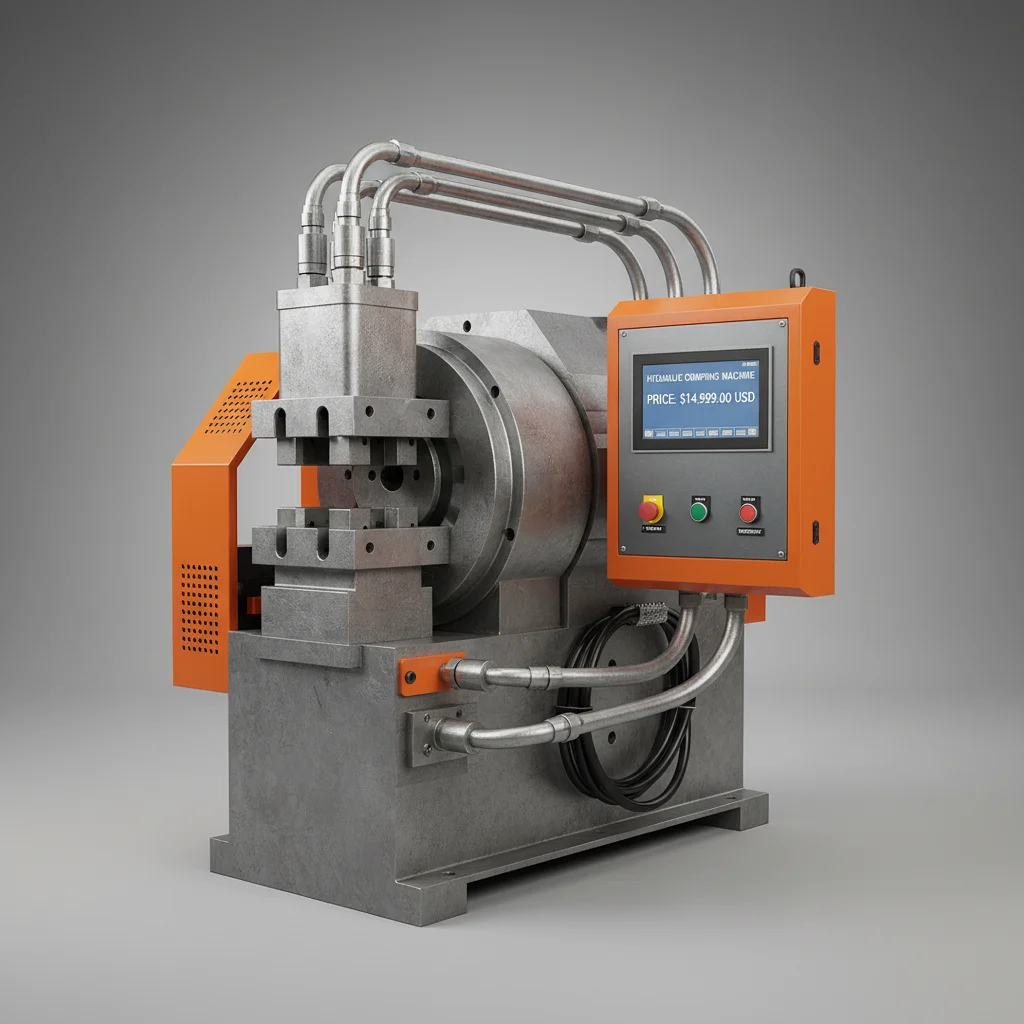
A hydraulic pipe clamp machine, in the context of connector pre-assembly, is a precision pneumatic instrument designed to hold a hydraulic hose securely while pressing a connector into place. Unlike a final crimper that compresses the fitting onto the hose, this machine focuses on the initial "mating" phase. It uses a powerful piston and a versatile chuck system to ensure the connector is inserted to the exact required depth.
At its core, this equipment bridges the gap between raw material preparation and final assembly. By employing a combination of clamping force and insertion force—such as the 8.0 KN clamping and 9.8 KN insertion capabilities of the DZW-YZ-1—it handles the heavy-duty task of seating tight-tolerance fittings that would be nearly impossible to install consistently by hand.
Modern versions of these machines are engineered for versatility, featuring adjustable stroke lengths and interchangeable die sets. This allows a single machine to accommodate a wide range of hose diameters, typically from 6mm up to 98mm, making it a flexible asset that evolves alongside the product catalog of the manufacturer.
Core Components for Maximum Stability
The effectiveness of a hydraulic pipe clamp machine depends on several critical engineering components. The pneumatic system is the heart of the operation, providing the consistent pressure needed for both clamping the hose and driving the connector. With a maximum air pressure of 8 Bar, the system ensures that the hose does not shift during the high-force insertion process.
Another essential element is the chuck and die set management. A high-quality hydraulic pipe clamp machine utilizes a wide chuck range (e.g., 0.24-3.85 inches) and a variety of dies, such as the YZ/8 to YZ/78 series. This allows the operator to switch between different connector sizes instantly, maintaining a lean production line without needing multiple machines for different hose diameters.
Finally, the piston stroke and insertion force control are what define the machine's capacity. A 150mm piston stroke provides the necessary flexibility for various connector lengths, while the 9.8 KN insertion force ensures that even the most stubborn heavy-duty industrial connectors are seated firmly. This combination of power and precision is what prevents the connector from shifting during the subsequent crimping phase.
Performance Metrics in Industrial Workflows
When evaluating the impact of a hydraulic pipe clamp machine on a production line, the most visible metric is the reduction in the error rate. Manual assembly often suffers from "bottoming out" issues or under-insertion, both of which lead to rejected parts during pressure testing. Automated pre-assembly creates a standardized baseline, ensuring every joint is identical.
Beyond quality, the speed of the workflow is significantly enhanced. The rapid cycles of a pneumatic pre-assembly machine shorten the total lead time from raw hose cutting to the final finished product, allowing workshops to increase their daily throughput without adding more staff.
Production Efficiency: Manual vs. Automated Pre-Assembly
Global Applications and Sector Integration
The application of a hydraulic pipe clamp machine extends across multiple high-stakes industries. In the construction and mining sectors, where massive excavators and drills rely on heavy-duty hydraulic lines, these machines ensure that the large-diameter hoses (up to 98mm) are assembled with a level of security that prevents on-site bursts. This is critical for maintaining uptime in remote industrial zones where a single hose failure can stop production for days.
In more precise fields like automotive hydraulics and industrial machinery manufacturing, the DZW-YZ-1's compact design allows it to be integrated directly into assembly lines. By syncing the flow from the hose rack to the pre-assembly machine and finally to the crimper, manufacturers achieve a "lean" output, reducing the footprint of their workshop while maximizing the quantity of certified, leak-free assemblies produced per shift.
Long-Term Value and ROI Analysis
Investing in a hydraulic pipe clamp machine provides an ROI that manifests in both direct cost savings and indirect risk mitigation. The most immediate gain is the reduction in labor costs per unit; tasks that previously required significant physical effort and time are now completed in seconds with the push of a button. This allows skilled technicians to focus on quality oversight rather than repetitive manual labor.
From a quality perspective, the reduction in scrap material is substantial. When connectors are incorrectly seated, the entire hose assembly often has to be discarded after a failed pressure test. By ensuring a perfect seat every time, the waste of expensive hydraulic hoses and fittings is virtually eliminated, directly improving the bottom line.
Furthermore, the long-term value is tied to brand reputation and safety. In the hydraulic world, trust is built on the reliability of the joint. Using automated pre-assembly equipment demonstrates a commitment to uncompromising quality control, reducing the likelihood of costly warranty claims or liability issues resulting from hose failure in the field.
Future Innovations in Hose Processing
The future of hose assembly is moving toward full digital integration. We are seeing the rise of "smart" hydraulic pipe clamp machines that can store pre-set parameters for different hose types. Instead of manual adjustments, operators will simply select a part number from a digital interface, and the machine will automatically adjust the stroke and pressure to match the specific fitting's requirements.
Sustainability is also becoming a core driver. Newer designs focus on energy-efficient pneumatic systems and the use of high-strength, lightweight alloys to reduce the machine's overall carbon footprint. The goal is to create a production environment where maximum force is delivered with minimum energy consumption.
As Industry 4.0 continues to permeate the manufacturing sector, the integration of IoT sensors within the pre-assembly process will allow for real-time quality monitoring. This means every single insertion can be logged with its exact force and depth, creating a digital birth certificate for every hose assembly, which is essential for the traceability requirements of the aerospace and medical industries.
Comparative Analysis of Hose Assembly Methods
| Assembly Method |
Precision Level |
Labor Intensity |
Waste Rate |
| Manual Pressing |
Low (3/10) |
Very High |
High |
| Basic Mechanical Clamp |
Medium (5/10) |
Medium |
Moderate |
| DZW-YZ-1 Pneumatic |
High (9/10) |
Low |
Very Low |
| Fully Automated Cell |
Ultra (10/10) |
Minimal |
Negligible |
| Hand-Tool Assembly |
Very Low (2/10) |
Extreme |
Very High |
| Hydraulic Press-Fit |
High (8/10) |
Low |
Low |
FAQS
It is designed to press connectors into hydraulic hoses accurately and firmly before they are crimped. This ensures the fitting is perfectly seated and aligned, which is critical for preventing leaks and ensuring the joint can withstand high operating pressures.
Yes, the machine is highly versatile. It features a chuck range of 6-98mm (0.24-3.85 inches) and is compatible with a variety of YZ series die sets, allowing it to handle a wide spectrum of hose diameters and fitting sizes common in industrial applications.
The machine operates with a maximum air pressure of 8 Bar. This is a standard requirement for most industrial pneumatic systems, making it easy to integrate the machine into existing workshop air lines without needing specialized compressors.
By ensuring the connector is pre-inserted to the correct depth and alignment, it prevents the connector from shifting or tilting during the actual crimping process. This results in a more secure, professional finish and a significantly lower failure rate during pressure testing.
The DZW-YZ-1 delivers a maximum insertion force of 9.8 KN. This high level of force is essential for handling tight-tolerance industrial fittings and heavy-duty connectors that cannot be seated using manual effort.
Absolutely. With compact dimensions of 930x530x1270mm, the machine has a small footprint that allows it to fit into tight spaces. Its ease of operation and versatility make it an ideal investment for both small specialized shops and large manufacturing plants.
Conclusion
The implementation of a hydraulic pipe clamp machine like the DZW-YZ-1 is a strategic move for any manufacturer aiming to optimize their hydraulic hose assembly line. By automating the pre-assembly phase, businesses can achieve a level of precision and consistency that manual methods simply cannot match, effectively eliminating the risk of leaks and reducing material waste. From its wide compatibility range to its powerful insertion force, the machine provides a scalable solution that enhances both product quality and production throughput.
Looking ahead, the integration of such precision equipment is no longer an option but a necessity in an era of strict industrial safety standards and high-pressure requirements. We recommend that workshops transition away from manual insertion to avoid the hidden costs of human error and failed pressure tests. To learn more about enhancing your assembly line efficiency, visit our website: www.willexcrimper.com.