Selecting the right hydraulic equipment often begins with a critical investigation into the pipe crimping machine price and the technical value it brings to a production line. For procurement managers in the metallurgical and mining sectors, the cost is rarely a flat fee but rather a reflection of the machine's clamping force, versatility, and long-term stability.
The variance in pricing is typically driven by the required chuck range and the precision of the mold sets. Whether you are processing small-diameter automotive brake hoses or large-scale industrial oil pipes, the investment must be balanced against the expected throughput and the cost of potential downtime caused by inferior equipment.
In this professional guide, we analyze the economic drivers of hydraulic crimping technology, examining how technical specifications like piston stroke and insertion force influence the final cost and the overall return on investment for hydraulic processing facilities.

Decoding the Cost Drivers of Hydraulic Crimping Equipment

When analyzing the pipe crimping machine price, it is essential to look beyond the initial invoice. The cost is a composite of material quality, the complexity of the hydraulic circuit, and the precision of the die sets. For instance, a machine capable of a chuck range from 6mm to 98mm requires significantly more robust structural reinforcement than a small-scale connector tool.
The metallurgical requirements for the piston and the clamping head also play a role. High-grade alloys that resist wear during thousands of cycles increase the upfront cost but drastically reduce the frequency of component replacement. In the specialized equipment manufacturing industry, "cheap" machines often lead to uneven crimping, which results in hose failure and costly liabilities.
Furthermore, the inclusion of diversified mold models, such as the YZ series ranging from 8mm to 78mm, adds to the system's versatility. A machine that can adapt to various hose diameters through simple mold changes offers a lower total cost of ownership compared to purchasing multiple single-purpose machines.
Technical Specifications That Justify Premium Pricing
Technical superiority in hydraulic machinery is measured by its ability to deliver consistent force without compromising the integrity of the hose. A maximum clamping force of 8.0 KN and an insertion force of 9.8 KN are not just numbers; they are guarantees of a leak-proof seal in high-pressure environments.
Precision is another critical factor. Machines that offer a pre-installed range of 3 inches and a piston stroke of 150mm allow for more complex assembly tasks, reducing the need for secondary manual adjustments. This level of engineering reduces the error rate in high-pressure oil pipe assembly, where a millimeter of deviation can cause a catastrophic failure.
Additionally, the integration of professional air pressure controls (e.g., 8 Bar maximum) ensures that the crimping cycle is repeatable. For businesses operating in the mechatronics or mining equipment sector, this repeatability is the primary driver of quality control and safety certification.
Industrial Application Scenarios and Equipment Scaling
The application of hose crimping technology varies widely across industrial sectors. In automotive brake hose production, the focus is on precision and high-volume repeatability. Conversely, in the fire sprinkler industry or for large-diameter industrial hoses, the priority shifts toward raw clamping power and the ability to handle larger outer diameters up to 98mm.
Scaling the equipment to the application is vital. A facility focusing on air conditioning hoses will require different mold sets and perhaps a lighter machine like the DZW-P series, whereas a heavy-duty hydraulic shop needs the robustness of the DZW-FP140. Using an oversized machine for small tasks is an inefficient use of energy and floor space, while undersized machines risk structural failure.
Moreover, the environment dictates the machine's build. Equipment used in mining or metallurgical plants must be designed for stability in complex, dusty, or vibration-prone environments. This requirement for "industrial-grade" durability often justifies a higher price point than equipment designed for clean-room assembly.
Operational Efficiency and Performance Benchmarks
Evaluating the performance of a crimper involves measuring the relationship between cycle time and the quality of the crimp. High-efficiency machines minimize the "dead time" between the loading of the hose and the completion of the clamping stroke, directly impacting the daily unit output of the factory.
When comparing standard equipment to high-precision models, the difference is most evident in the consistency of the clamping force across the entire diameter of the fitting. This prevents "ovality" in the finished crimp, which is a common cause of leakage in high-pressure hydraulic systems.
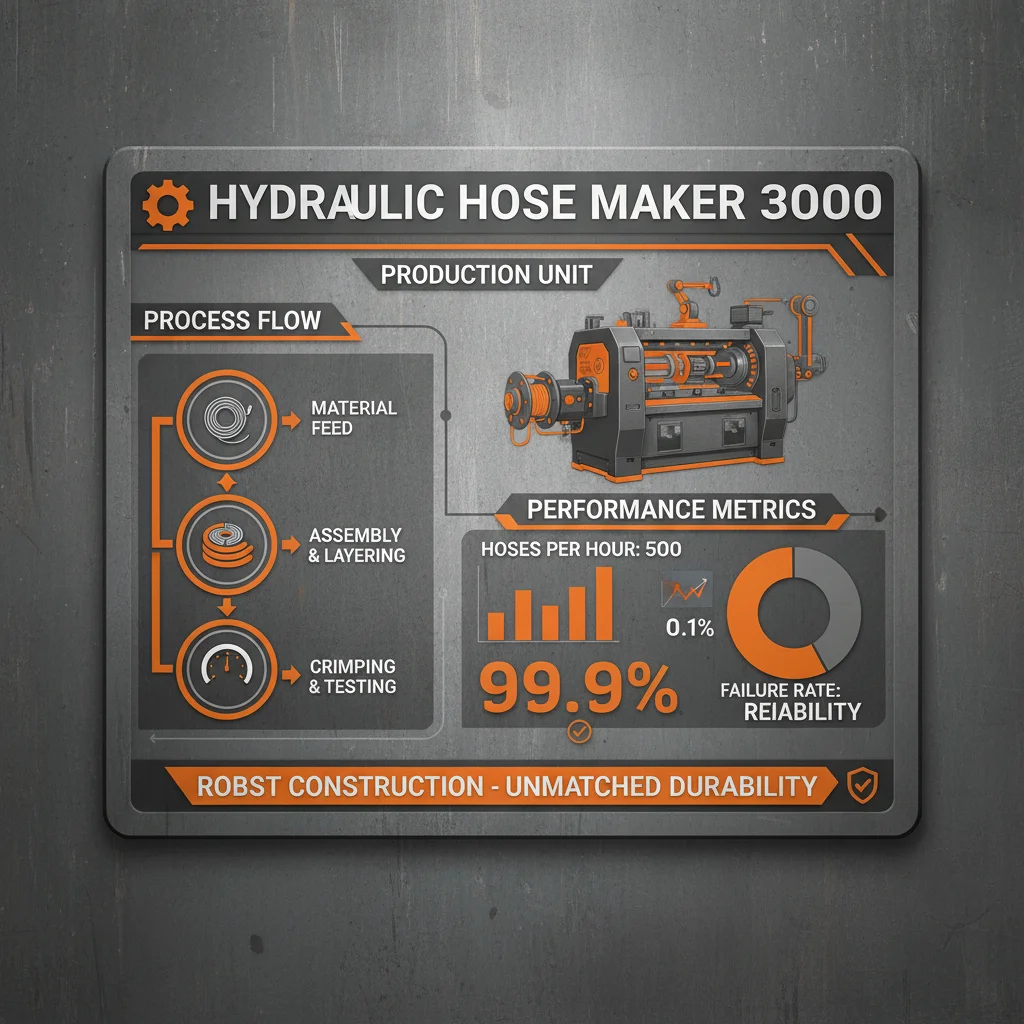
pipe crimping machine price Performance Metrics
The chart above illustrates that while the initial investment in professional-grade equipment may be higher, the gains in clamping precision, operational stability, and reduction in scrap rates provide a significantly higher performance ceiling compared to entry-level industrial alternatives.
Strategic Procurement and Vendor Evaluation Framework
Procuring hydraulic machinery requires a shift from "lowest-price" thinking to "total-cost" analysis. A low-cost machine that requires frequent recalibration or experiences piston seal failures every six months is far more expensive than a premium machine with a 24/7 technical support guarantee.
Key evaluation factors should include the supplier's capacity for customization. For instance, the ability to adjust performance parameters to meet specific hose material requirements can be the difference between a standard product and a tailored industrial solution. Verification of the manufacturer's technical staff and factory scale also ensures they can sustain long-term parts availability.
Finally, after-sales service is a critical component of the value proposition. Professional technicians available for troubleshooting and predictive maintenance help transition the equipment from a simple tool to a reliable asset in the production chain.
The Shift Toward Intelligent Hydraulic Control Systems
The future of hydraulic processing is moving toward data-driven production. We are seeing an increase in the adoption of intelligent control systems that optimize the crimping cycle based on real-time pressure feedback. This reduces energy consumption and minimizes the risk of over-crimping, which can weaken the hose wall.
Integration with predictive maintenance is another emerging trend. By monitoring the hydraulic pressure patterns over thousands of cycles, systems may soon be able to alert operators to seal wear or mold misalignment before a defect occurs. This shift from reactive to proactive maintenance is expected to increase the lifespan of machines like the DZW-EP and DZW-FP series.
Additionally, the exploration of new materials for the dies and pistons could lead to even higher clamping forces without increasing the machine's footprint. As global industrial needs evolve, the focus will likely remain on the balance between multifunctionality and energy efficiency.
Comparing Crimping Solutions by Capacity and Use Case
Choosing the correct machine depends entirely on the specific diameter and pressure requirements of your project. A a specialized approach prevents the waste of capital on unnecessary capacity while ensuring that safety margins are always met.
The following comparison breaks down different equipment categories based on their technical application and operational priorities, helping buyers align their needs with the correct machine class.
| Solution Type | Primary Use Case | Key Technical Priority | Maintenance Requirement |
|---|---|---|---|
| Light-Duty (P-Series) | AC/Brake Hoses | High Repeatability | Basic Seal Lubrication |
| Mid-Range (EP-Series) | Industrial Oil Pipes | Balanced Force/Speed | Quarterly Pressure Check |
| Heavy-Duty (FP-Series) | Mining/Hydraulic Rig | Maximum Clamping Force | Rigorous Structural Audit |
| Large-Diameter Custom | Fire Sprinkler/Water | Chuck Range Expansion | Die Set Precision Tuning |
| Pre-assembly Systems | Connector Fitting | Insertion Accuracy | Alignment Calibration |
| Full-Line Integration | Automated Factory | System Synchronization | Software/Sensor Updates |
Ultimately, the best selection is one that matches the daily workload with the machine's durability. For those evaluating their options, detailed specifications and company capabilities can be reviewed through www.willexcrimper.com to ensure the equipment aligns with your industrial objectives.
Frequently Asked Questions
Conclusion
The investment in a pipe crimping machine is a strategic decision that impacts both the quality of the final assembly and the operational efficiency of the facility. While the pipe crimping machine price varies based on technical capabilities, the real value lies in the machine's ability to provide consistent, leak-proof results over thousands of cycles.
By prioritizing technical specifications like clamping force and chuck versatility over the lowest possible price, businesses can ensure long-term stability and reduce the total cost of ownership. For professional procurement and technical consultations, the resources available at www.willexcrimper.com provide a comprehensive starting point for optimizing your hydraulic processing capabilities.