Finding reliable hose crimping machine suppliers is a critical decision for any industrial operation that depends on high-pressure fluid power systems. The integrity of a hydraulic connection determines not only the operational uptime of heavy machinery but also the safety of the personnel operating it. In a global market where precision is paramount, the choice of equipment provider dictates whether a business achieves seamless assembly or faces costly leaks and downtime.
Modern industrial standards, such as those established by ISO, demand tighter tolerances and more repeatable results than ever before. This shift has forced professional hose crimping machine suppliers to move away from purely mechanical systems toward integrated digital solutions. By incorporating advanced sensors and electronic rulers, these suppliers are now providing tools that eliminate the guesswork traditionally associated with manual crimping, ensuring a leak-proof seal every time.
Whether you are equipping a new workshop or upgrading an existing assembly line, partnering with experienced hose crimping machine suppliers ensures you receive technology that balances rugged durability with extreme precision. The transition to touch-screen interfaces and programmable memory banks represents the current gold standard in the hydraulic equipment manufacturing sector, allowing for unprecedented efficiency and safety across various industrial applications.

The Role of Precision in Selecting Hose Crimping Machine Suppliers
Precision is the defining metric when evaluating hose crimping machine suppliers. For a machine like the DZW-P32T, the integration of a European electronic ruler allows for an accuracy of 0.01mm. This level of precision is not merely a technical specification; it is a safeguard against the catastrophic failure of high-pressure seals in critical environments, ensuring that every crimp meets exact SAE or DIN standards.
When suppliers prioritize this degree of accuracy, they enable their clients to handle diverse hose types—from 2-inch SAE 100 R15/R13 hoses to delicate automotive brake lines—with absolute confidence. The ability to maintain consistency across thousands of cycles reduces waste and eliminates the need for manual re-measurement, which is the primary bottleneck in traditional assembly shops.
Core Components of High-Performance Crimping Systems
A high-performance system is only as reliable as its weakest component, which is why leading hose crimping machine suppliers utilize world-class electrical and hydraulic parts. The use of Schneider electrical contactors and circuit breakers ensures that the system is protected against electrical faults and overloads, providing a stable foundation for continuous industrial operation.
The hydraulic heart of the machine relies on Accord-Hytos solenoid valves, which facilitate rapid response and precise control of oil flow rates. This synergy between high-grade valves and Siemens motors allows the DZW-P32T to exert a massive force of 2000 KN (200 Tons) while maintaining a closing speed of 2.7 mm/s, balancing raw power with controlled execution.
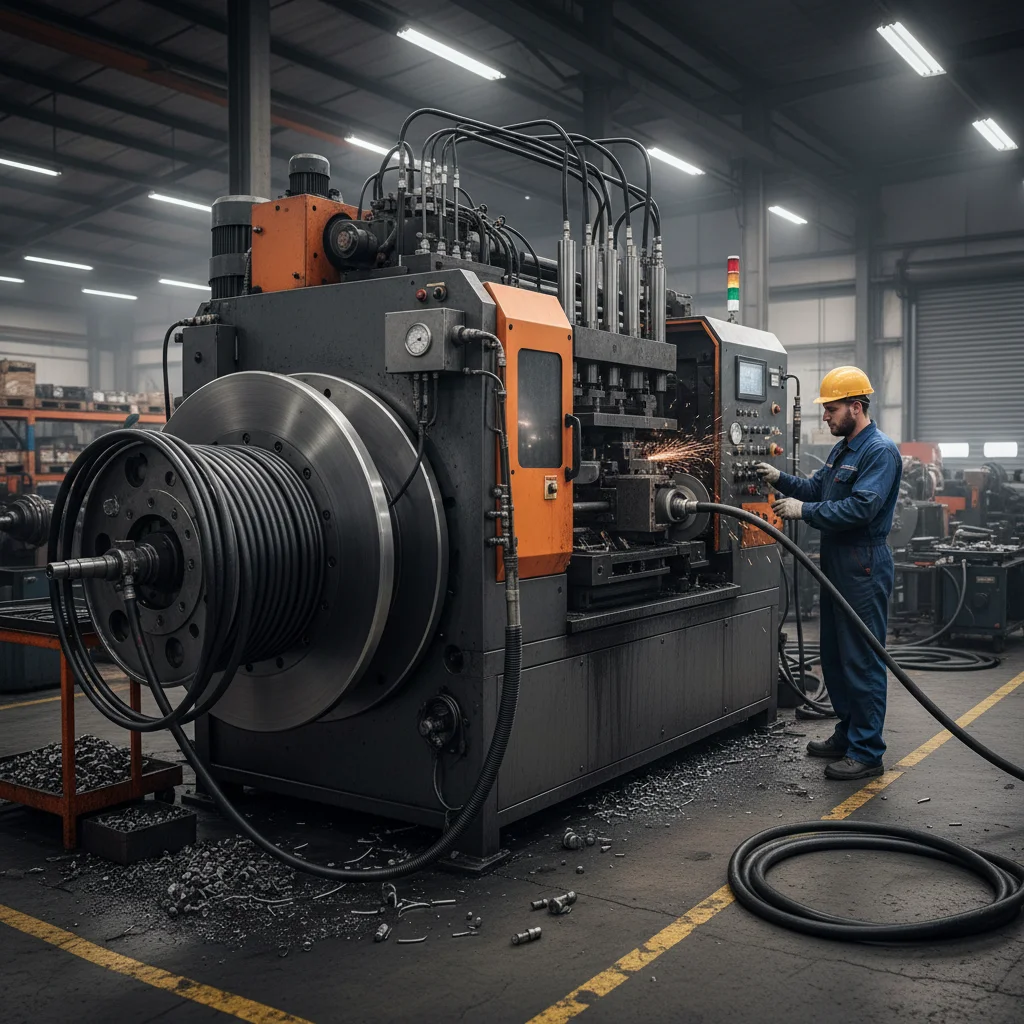
Furthermore, the physical architecture must be rugged. A machine weight of 286kg and a robust frame prevent chassis deflection during high-pressure cycles. This structural integrity, combined with the flexibility of interchangeable die sets, allows the machine to scale from small-diameter air conditioning pipes to large-scale industrial fire sprinkler hoses without compromising the seal.
Digital Transformation and Smart Control Interfaces
The evolution of the industry has seen a shift toward "smart" manufacturing, where hose crimping machine suppliers now integrate advanced HMI (Human Machine Interface) systems. The transition from manual dials to a Siemens digital touchscreen allows operators to monitor pressure and dimensions in real-time, transforming a manual craft into a data-driven process.
One of the most significant breakthroughs offered by modern hose crimping machine suppliers is the preset memory bank. The DZW-P32T can store up to 200 unique crimping records, allowing a technician to recall specific parameters for a repeat order with a single touch. This eliminates the time-consuming process of manual setup and removes the risk of human error during adjustment.
This digital layer extends to die management and flow control. With one-touch mold change capabilities and real-time feedback on hydraulic pressure, these machines optimize the workflow of the entire shop. By digitizing the parameters, suppliers ensure that the quality of the crimp is independent of the operator's experience level, democratizing high-precision assembly.
Operational Efficiency and Investment Return Analysis
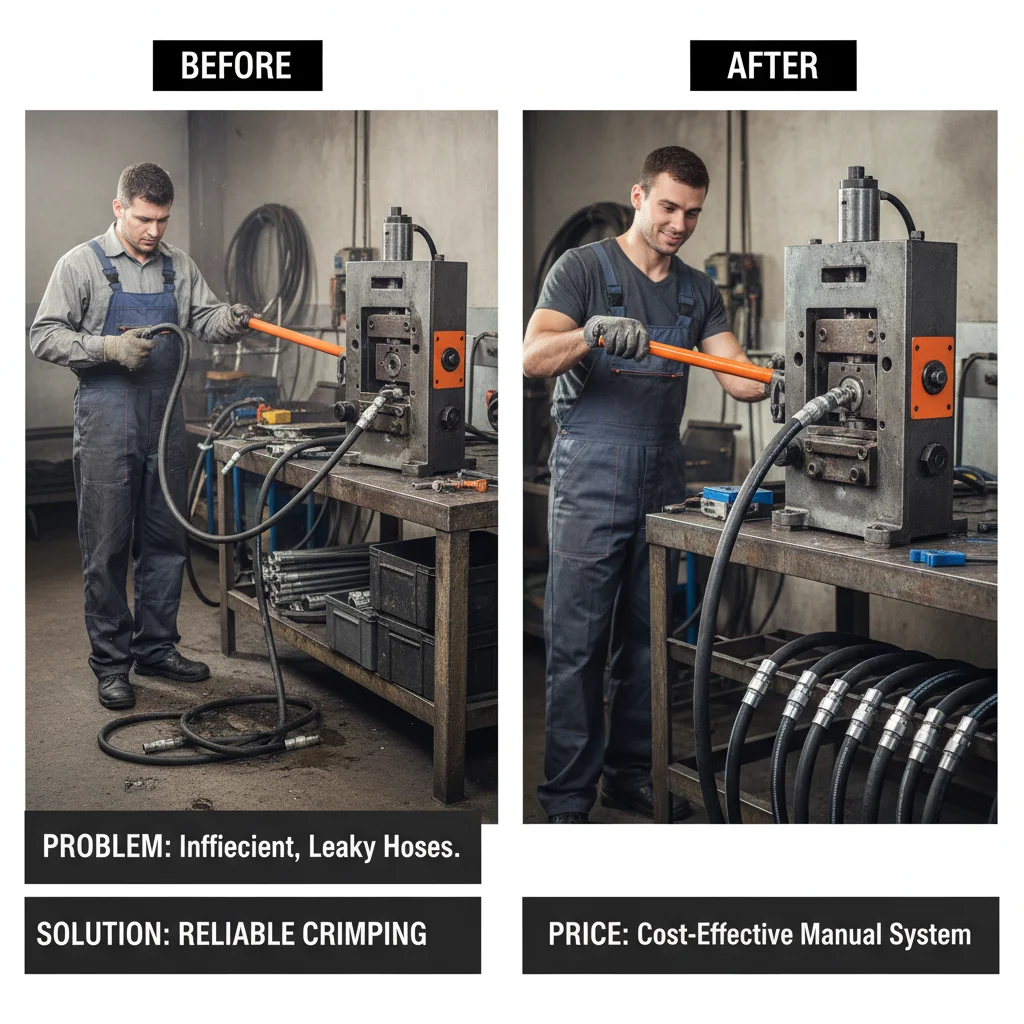
When analyzing the return on investment (ROI), the difference between manual equipment and digital solutions from premium hose crimping machine suppliers becomes clear. Manual crimpers require highly experienced operators and often result in higher waste rates due to estimation errors. In contrast, a digital system like the DZW-P32T reduces setup time from minutes to seconds via its memory bank.
The long-term value is found in the reduction of "scrap" material and the increase in production volume. Because the digital system ensures repeatable accuracy of ±0.01mm, the waste rate is minimized, and the capacity for high-volume industrial output is significantly increased, allowing businesses to scale their operations without increasing their workforce.
Efficiency Rating Comparison: Manual vs. Digital Suppliers
Global Applications Across Critical Industrial Sectors
The versatility provided by top hose crimping machine suppliers allows their equipment to be deployed in diverse and demanding environments. In the mining and engineering machinery sectors, where hydraulic lines must withstand extreme pressures and abrasive conditions, the DZW-P32T's 200-ton force ensures that connections remain secure under the most grueling loads.
Beyond heavy industry, these machines are indispensable in automotive transportation and agricultural equipment manufacturing. Whether it is the precision required for brake lines in a passenger vehicle or the ruggedness needed for a tractor's hydraulic lift, the ability to swap die sets quickly allows a single machine to service multiple product lines, making it a focal point of lean manufacturing.
Safety Standards and Risk Mitigation in Hydraulic Assembly
Safety is non-negotiable in hydraulic assembly, and the best hose crimping machine suppliers integrate multi-layered protection systems. The DZW-P32T features a dedicated emergency power-off function and a prominent red "STOP" switch, ensuring that any operational anomaly can be halted instantly to prevent workplace accidents.
Risk mitigation also extends to the electrical system. By integrating Schneider circuit breakers, the machine protects itself and the operator from electrical surges and overloads. This focus on safety ensures that the pursuit of high production volume never comes at the expense of operator wellbeing or machine longevity.
Moreover, the precision of the electronic ruler acts as a safety feature in itself. By preventing "over-crimping" (which can weaken the hose wall) or "under-crimping" (which leads to blow-outs), the machine ensures that the final product is inherently safe for use in high-pressure environments, protecting the end-user of the hydraulic hose.
Future Trends in Automated Crimping Technology
The future of the industry is moving toward total automation and IoT integration, a trend currently being led by forward-thinking hose crimping machine suppliers. We are seeing a shift toward machines that can communicate with warehouse management systems, automatically selecting the correct crimping parameters based on the barcode of the hose and fitting being used.
Sustainability is also becoming a core focus. High-efficiency Siemens motors are reducing power consumption while maintaining peak torque, reflecting a broader industrial move toward "green" manufacturing. Future iterations will likely see even more energy-efficient hydraulic pumps and biodegradable oil options to reduce the environmental footprint of assembly shops.
As digital transformation accelerates, the role of the operator will shift from a manual technician to a system manager. With the ability to store hundreds of records and monitor performance via cloud-based interfaces, the assembly process will become more transparent, allowing for remote quality audits and predictive maintenance based on cycle counts and pressure logs.
Comparative Analysis of Crimping Technology Generations
| Technology Gen |
Precision Method |
Setup Time |
Reliability Score |
| Manual Analog |
Mechanical Dial |
Slow/Manual |
4/10 |
| Semi-Digital |
Digital Readout |
Moderate |
6/10 |
| Touch-Screen (DZW-P32T) |
Electronic Ruler |
Instant (Memory) |
9/10 |
| IoT Integrated |
Cloud-Sync Auto |
Zero (Automated) |
10/10 |
| Low-Cost Import |
Estimated/Manual |
Slow |
3/10 |
| Enterprise Grade |
Laser Calibration |
Instant |
9.5/10 |
FAQS
With standard dies, the maximum crimping diameter is 87mm (3.42 inches). However, for those working with larger industrial applications, this capacity can be extended up to 109mm (4.3 inches) when using master dies, making it a highly versatile choice among hose crimping machine suppliers.
The European electronic ruler replaces traditional manual calipers and dials, providing a precision of 0.01mm. This ensures a perfectly consistent seal and prevents hose deformation, which is critical for maintaining high-pressure integrity in hydraulic systems.
Yes, the DZW-P32T is designed for versatility. By replacing the die sets, the machine is suitable for crimping air conditioning pipes, automotive brake hoses, fire sprinkler hoses, and various industrial cables, expanding its utility beyond just hydraulics.
To adapt to different workshop electrical setups, the machine supports both 3-phase (4.0KW / 5.5HP) and 1-phase (1.5KW / 2.0HP) power configurations, ensuring it can be installed in both heavy industrial plants and smaller service shops.
The Siemens digital touchscreen interface allows the operator to store and save up to 200 different crimping records. This feature is a major advantage provided by professional hose crimping machine suppliers to eliminate setup time for repeat orders.
The DZW-P32T includes a dedicated emergency power-off button, a specialized mold opening stop function, and clearly marked red STOP switches. These features are designed to prevent operational accidents and ensure a safe working environment.
Conclusion
Selecting the right partner among hose crimping machine suppliers is not just about purchasing a piece of equipment, but about investing in the long-term reliability and safety of your fluid power connections. As demonstrated by the DZW-P32T, the combination of Siemens digital control, Schneider electrical components, and European precision rulers creates a system that minimizes waste, maximizes throughput, and ensures leak-proof seals across a wide array of industrial applications.
Looking forward, the integration of automation and energy-efficient motors will continue to redefine the standards of hydraulic assembly. For businesses seeking to remain competitive, upgrading to digital, programmable crimping technology is the most effective way to reduce human error and increase operational scalability. To upgrade your assembly line with world-class precision, visit our website: www.willexcrimper.com.